Missouri Press Association
Serving Missouri Newspapers Since 1867
As a sportswriter for the Joplin Globe a long, long time ago, I’ve always been interested in how newspapers cover high school sporting events.
That interest was rekindled when my eldest son served as sports editor of the Carthage Press for seven years; he’s been a stringer for the Ozark Sports Zone since the Press closed in 2018. We frequently discuss why certain coaches won’t return phone calls or emails for preseason preview stories, why some athletic directors fail to notify the media about schedule changes or game cancellations, and the complexities of the Missouri State High School Activities Association (MSHSAA).
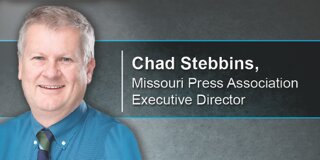
In my role with the Missouri Press Association, I’ve had the opportunity to delve a little deeper into the inner workings of MSHSAA.
In August 2025, I received an email from an MPA member who was distressed that MSHSAA was going to require every outlet applying for credentials to upload documentation proving its business status. This included established media outlets such as newspapers, TV stations, and radio stations. MSHSAA’s intent was to determine which outlets weren’t legitimate news-gathering operations and reduce the number of photographers along football sidelines and basketball baselines.
Although MSHSAA said examples of the required documentation included LLC confirmation, an IRS EIN letter, or a Missouri business license, for established newspapers it accepted a photo of the paper’s front page or the journalist’s MPA press card. Again, the intent was to determine if an outlet had a legitimate reason to be credentialed. As Bill Battle, sports editor of the Washington Missourian, told me, there were too many “paparazzi and mamarazzi” (parents and grandparents) who show up at games and stand in the media’s way.
“These are people who obviously come out of the stands with camera equipment and walk into our media areas,” Battle said. “It’s not so bad during the regular season, but when we have to jump through all of the credentialing hassles and these people just bluff their way into these ‘protected’ spaces, it’s exceptionally frustrating.”
In April 2026, MSHSAA invited me to attend its annual Media Advisory Committee meeting and provide insights from a press perspective. I couldn’t make that meeting, but I did send a list of eight MPA concerns to Andrew Kauffman, director of communications; and Scott Lunte, communications assistant. Both are former journalists and have experienced most of the issues affecting our writers and photographers.
Kauffman and Lunte addressed every one of our suggestions with the Media Advisory Committee (MAC), and we should see some of them implemented after approval at the next MSHSAA board of directors meeting.
A later request that MSHSAA provide some food for journalists at the state wrestling and track events might even be added to next year’s MAC agenda, although it’s a budgetary issue with logistical concerns. Kauffman and Lunte remember how having something to eat during those 10-hour days made their former jobs more bearable.
Here are some of the takeaways from a June 10 follow-up meeting I had with them:
“Keeping that information up to date is beneficial not only for MSHSAA, but for your outlet as well,” Lunte said. “It ensures the appropriate individuals receive our communications, including board of directors meeting summaries, advisory committee updates, membership ballot results, policy changes, and other news. Those communications can often serve as the starting point for story ideas, feature opportunities, or topics that an outlet may not have otherwise considered covering.”
The bottom line is that Kauffman and Lunte want the athletes to get all the media coverage they deserve and are eager to work with MPA and MBA members. While their primary responsibility is serving the communication needs of MSHSAA schools, they also feel a responsibility to support the media who help tell all these stories.
“If there is a school administrator/coach or individual who is not fully embracing the spirit of promoting and sharing the stories our student-athletes, coaches, and programs have to offer, we would love for them to reach out to one of us,” Lunte said. “We would be happy to have a conversation and help foster a positive working relationship that benefits everyone involved.”