
Missouri Press Association
Serving Missouri Newspapers Since 1867
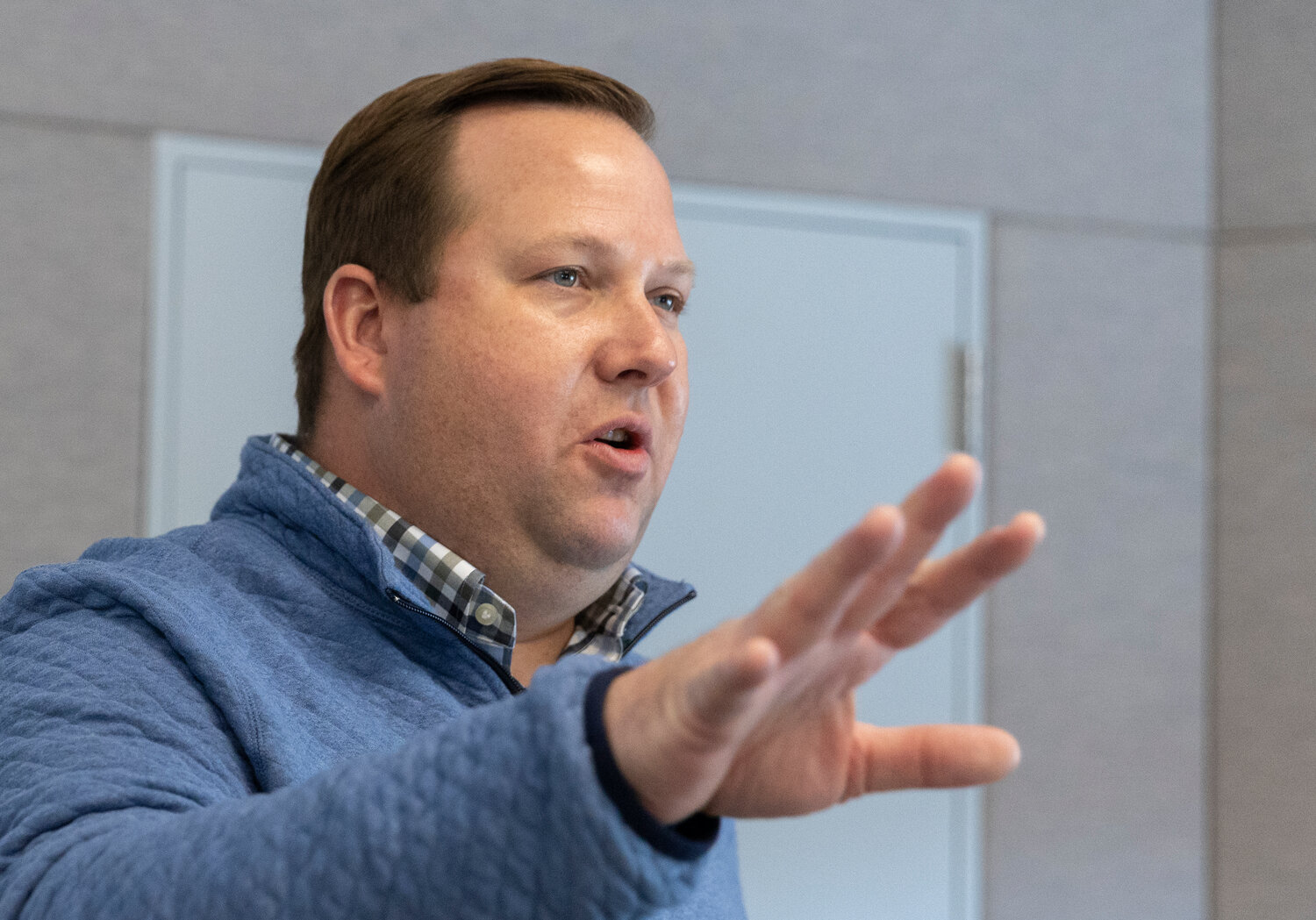
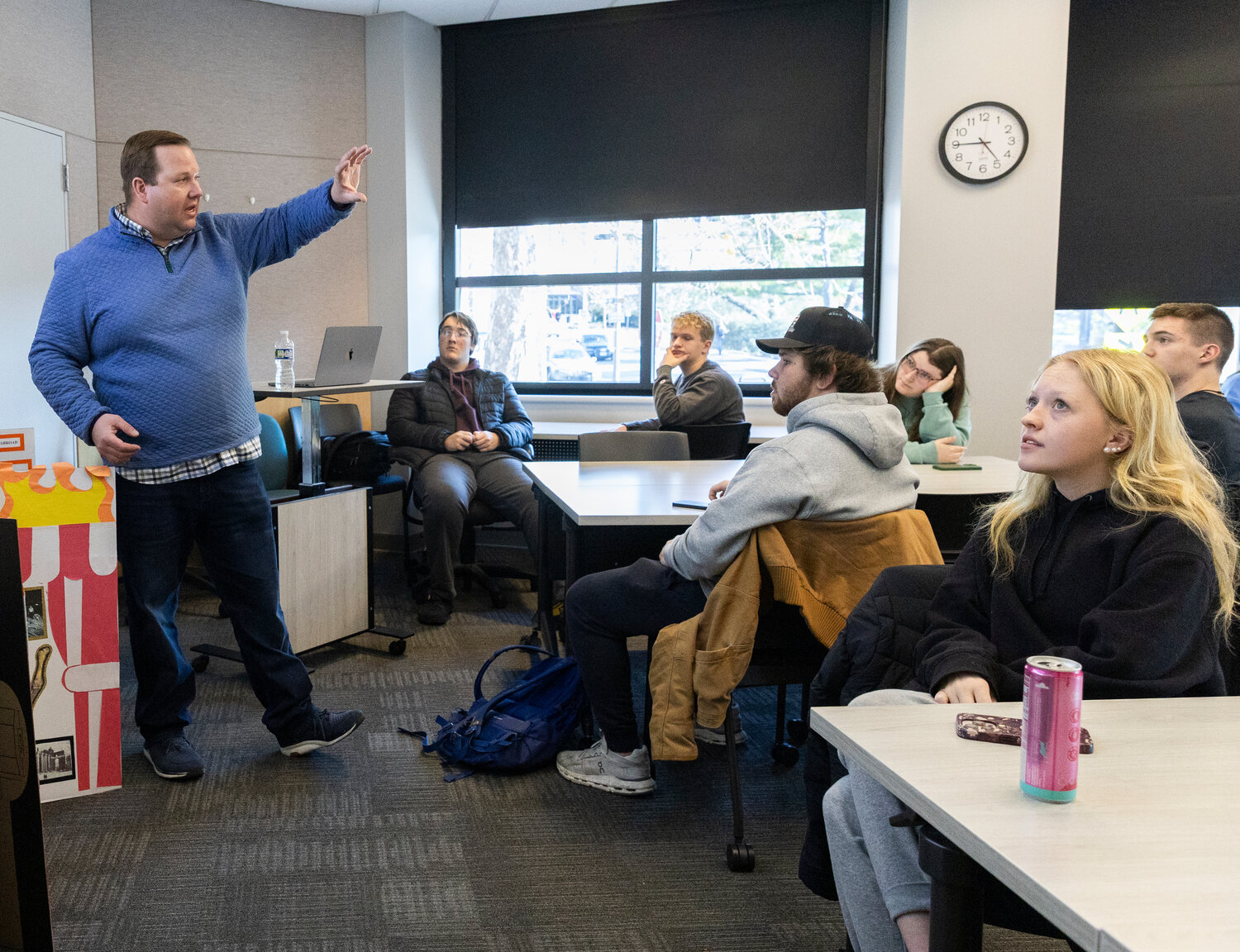
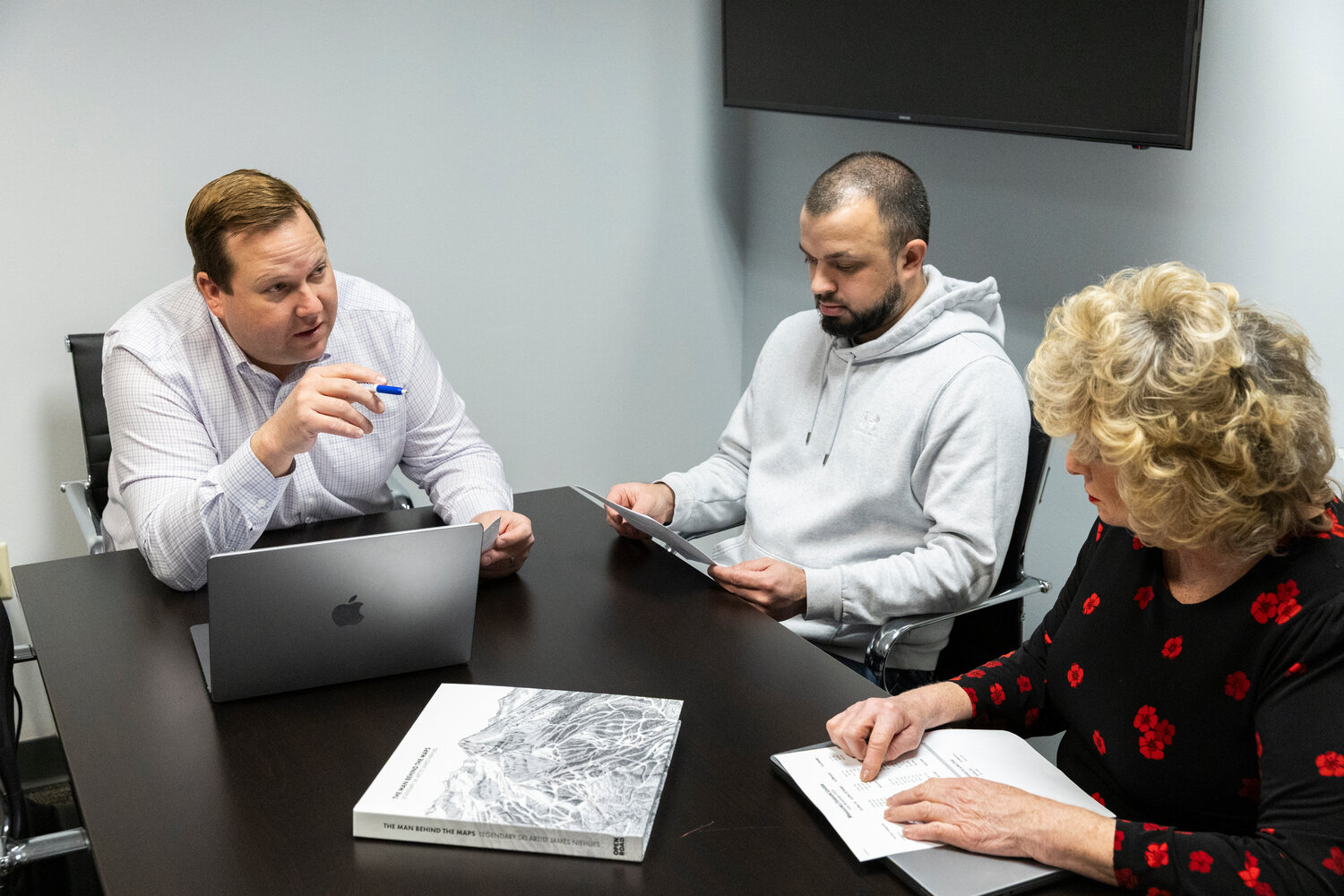


Instead of a story about himself, Bryan Chester, Missouri Press Association’s new 2026 president, would rather you read about how other publishers, editors, general managers and ad salespeople from throughout Missouri are planning for 2026.
For Chester, the thoughts and opinions of Missouri Press’ membership are a much better barometer about the state of the newspaper industry. They are also more useful in helping the Missouri School of Journalism determine how training and education should be focused for Missouri’s next generation of journalists.
In addition to being MPA’s new president this year, Chester is the general manager of the Columbia Missourian and, most recently, the Boone County Journal. He also teaches as a faculty member of the Novak Leadership Institute.
Chester plans to feature the J-school’s faculty and staff prominently throughout the year in various ways, relying on the expertise of his colleagues to share new ideas, evolving best practices and explainers on emerging technology.
He also is excited about the Missourian Publishing Association’s acquisition earlier this year of the Boone County Journal, which gives the J-school, students and professors a true rural newsroom to provide coverage for and test ideas that can then be shared with other media outlets.
Chester thinks the Journal, located about 15 miles south of Columbia in Ashland in southern Boone County, will be crucial in giving J-school students a taste of what it’s like to work in a rural newsroom setting. That could be the difference in someone deciding what their career after college looks like.
“I was wondering what the enthusiasm level would be amongst the student reporters who come here with the expectation to work for the Missourian, and Ashland is just a completely different kind of community,” Chester said. “[Missourian Executive Editor Elizabeth Stephens] and I just had a conversation about this, but our reporter down there has just loved it, loved the experience, and is going to be the [teaching assistant] for next semester.”
Even after the Journal reporter’s semester ended, Chester said she went to the school board meeting in Ashland to see through the reporting she had spent the previous several months covering. “Because she wanted to know what the resolution was going to be.”
Adding the Journal to the Missouri News Network, the J-school’s collaborating newsrooms and working journalism labs, gives students a new perspective on what it means to be a professional journalist.
“It’s much more realistic to move from the Columbia Missourian to the Boone County Journal or a newspaper like that where you can have ownership and shape the coverage you’re providing the community,” Chester said. “You can dig yourself in and become part of the community, and I think that’s leading to students who are seeing opportunities they didn’t otherwise know they had.”
He also credits MPA’s Rural Missouri Newspaper Scholarship with developing that mentality for J-school students, as well. “When you think about it, a lot of these students are from a small town, so go back to a small town. Cover it for a few years and see where you want your career to go.”
Expanding the Association
In 2026, Chester wants to focus on expanding Missouri Press’ membership ranks and growing participation at events. Both will require feedback and buy-in from the association’s existing members.
“What does expansion and growth look like for Missouri Press? I know we’ve talked about expanding membership into magazines and other publications, but do we open it up more to digital platforms?” Chester said.
The digital-only outlets need to be pursued in some form, and a committee of the MPA Board is working on figuring out how to make that happen.
“What does a digital outlet’s inclusion look like, and do they have voting rights? What kinds of guardrails do we need to put in place to insulate our rural weeklies and address any fears of a Patch-takeover type of situation,” Chester said of the ideas currently being discussed.
For those who don’t know, Patch Media is a series of hyperlocal news sites that claim to cover communities with breaking news and features. A quick review of a few of the company’s sites following this interview with Chester, however, showed the content was often aggregated from other news sources or rehashed press release content.
“We don’t want someone coming up and starting 30 fly-by-night AI-based online newspapers,” Chester said. “But I do think growth for the Association will have to come in digital form.”
That doesn’t mean abandoning what has kept MPA going for 160 years but rather acknowledging the industry’s changes and being proactive in anticipating how they will affect legacy media.
“We have to think creatively about what the future of our industry looks like, while at the same time fiercely protecting those things that we hold sacred,” he added.
One of those newspaper tenets is public notices, which can represent a large amount of revenue for many of the state’s newspapers. Combined with broadband internet service that is still lacking throughout much of the state, publishing these notices remains vital not only for MPA members but their readers, as well.
“I don’t think that’s a service that can be done digitally right now, but we have to prepare for when that day comes,” Chester said. “The legislature is always looking for places to cut; every now and again we’ll have an adversarial legislator who uses [public notices] as a cudgel.”
A few bills have already been filed for the Missouri General Assembly’s 2026 legislative session that would remove public notices of various types from newspapers, including HB 2179, which would remove all public notices from newspapers in the five charter counties and place them on the Secretary of State’s website.
Part of what makes public notices in printed newspapers so invaluable is their permanence, something that goes away if a digital ad is posted online and can be edited at will, even by the agency posting it.
Printed newspapers are only possible, though, if there are facilities capable of printing them in the first place, another issue that Chester sees as an area of concern in the coming years.
“We will run out of printers before we run out of print subscribers,” Chester said. He points to SB 1209, a bill filed that will provide tax credits for certain printing plants, as a good way of financially assisting facilities that often struggle with rising costs of materials and labor.
The most important thing for community newspapers is to leverage their longevity in the community and their brands as trusted voices when it comes to news and information.
“Local community newsrooms have been able to sort of still hold high trust amongst their readers because they do local journalism,” Chester said. “My biggest fear for the industry is what happens when these places close down. What fills that void? You already see it right now with Facebook pages and things like that, but it’s going to be much worse with AI writing.”
Chester said generative AI as a tool to support newsroom operations makes sense. He also sees why a lot of newspapers are using services like ChaptGPT to write news stories based on sports scores, but thinking of AI as a replacement for a body in the newsroom is doing a disservice to readers.
“The computer doesn’t know if there was a streaker or if the coaches got in a fight. You just know that Johnny Stevenson hit a double and that advanced Tom Johnson to third base, but you lose the visceralness of being there to see the action in person,” Chester said.
Propagation of AI becomes a slippery slope because as coverage gets hollowed out, readers start to question why they should subscribe or pay for the newspaper. “We all know that corruption runs rampant in news deserts.”
Growing Association participation
Chester also hopes to grow participation in events Missouri Press puts on throughout the year. Specifically, he hopes to see industry professionals in the middle of their careers being introduced to the association and encouraged to participate in meetings and events.
While the time and monetary commitment might be extensive, Chester said his own career path is an example of how beneficial the process can be for people in the newspaper industry. His start with Missouri Press only happened because he was brought to the advertising managers’ meetings and eventually asked to join that group’s board of directors.
Now, he says more people in positions of leadership at Missouri newspapers need to do the same for their staff to introduce new faces and, more importantly, new ideas to what is being discussed at Missouri Press meetings of all levels.
“We have to be asking ourselves, why aren’t they coming? Is it because they don’t think the programming is relevant? Are they not coming because they think we cater to something that isn’t them?” Chester said.
Missouri Press Association’s 160th Annual Convention and Trade Show will be held Sept. 24-26 in Columbia. Chester said the centralized location should help reduce travel time as a factor for members’ participation.
“I hope to see good participation in this year’s convention. I know it might cost a small fortune for some newspapers between registration and hotel rooms, but I think with what we’ve been discussing and involvement from the Missouri School of Journalism, the benefit of attending will outweigh the cost,” Chester said.
Bryan Chester is MPA’s 2026 president. He officially took office on Jan. 1, after being elected during the Association’s 159th Annual Convention in Wildwood. He lives in Columbia with his wife, Jessica, and their son, Grayson.
Look for more information from Missouri Press about attending this year’s convention in upcoming editions of Missouri Press News and on the association’s website, www.mopress.com.


